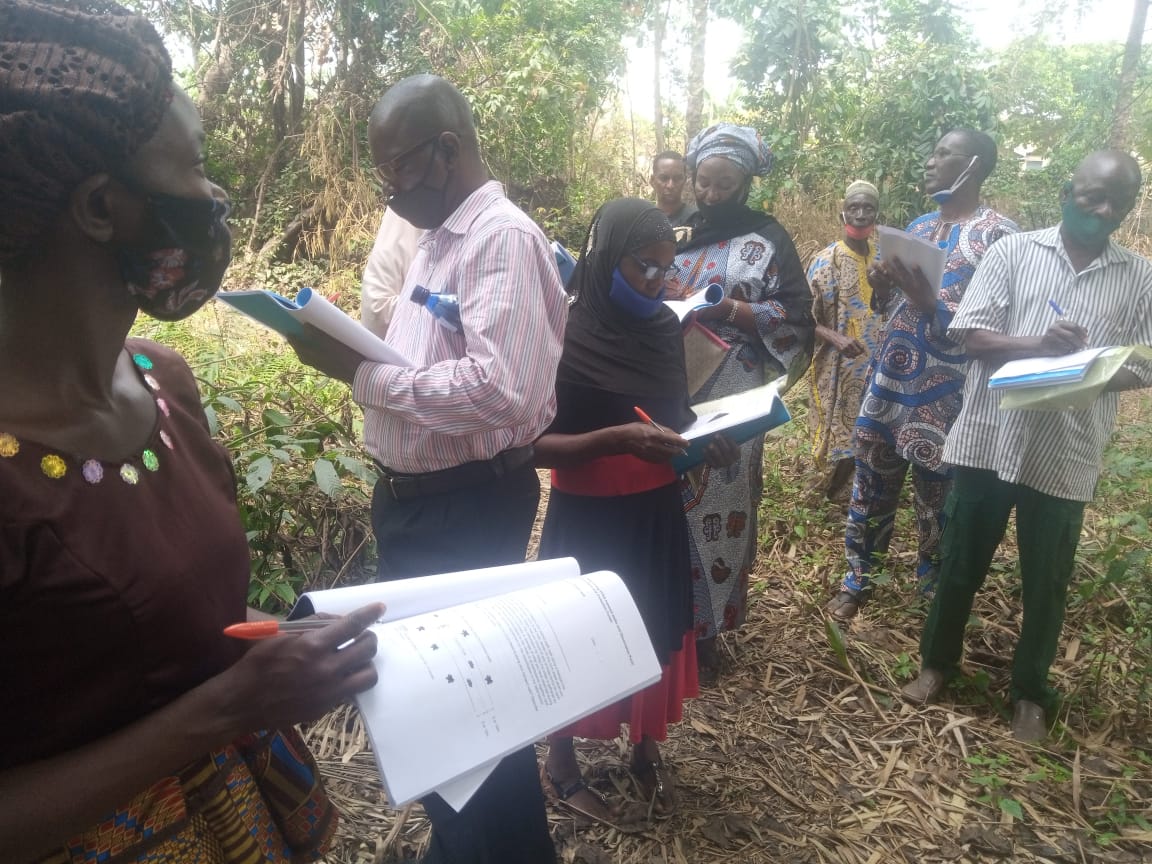
2,500 ha restored
About 2,500 hectares of land has been restored through this solution, with many flora and fauna species re-established.
Our Impact
Restoration, training, and enterprise — measured in hectares, households, and tonnes of CO₂ sequestered.
By the numbers
Figures cover all of our work across Nigeria. Project-specific figures describe the Agbado-Ekiti community project.
2,500+
Hectares of forest restored
1,200+
Women and youth trained
800+
Households benefiting
47,000+
Indigenous seedlings raised and distributed
75,000 t
CO₂ sequestered per year
23
Stakeholders
20+
Community guides trained
Since 2020
Community-led conservation
Environmental impacts
Our work spans ecosystems, communities and value chains, producing outcomes that can be seen, measured, and felt.
2,500 ha restored
About 2,500 hectares of land has been restored through this solution, with many flora and fauna species re-established.
75,000 tons of CO₂ sequestered / year
Improved ambience of the environment and at least 75,000 tons of CO₂ sequestered per year.
1,200+ women & youths trained
IA has facilitated training of over 1,200 women and youths in climate-smart agriculture (CSA) and sustainable ecosystem management.
Behavioural change in communities
These trainings have changed the behavioural attitude of local communities, empowering them to engage in sustainable harvesting and consumption, value addition, circular bio-economy, and regenerative organic farming.
Resilience to weather shocks
Communities are now better equipped to build resilience to storms, flooding, heat and other unpredictable natural challenges.
Biodiversity loss reduced
Biodiversity loss has been reduced drastically, with protection and proliferation of species — especially those on the verge of extinction or critically endangered.
800+ households benefiting
More than 800 households are benefiting from increased income through established micro-enterprises.
Life in the natural form in the biosphere sustains itself because it depends on renewable resources and because it recycles virtually all matter.
How agroforestry works
Agroforestry contributes to climate change mitigation and adaptation, and brings farmers closer to nature in the process.
Climate mitigation & adaptation
Biological principles
Shelter the soil
Tree planting shelters the soil from erosion by wind and water.
Multiply rare species
Facilitates rare species multiplication across the landscape.
Raise agricultural productivity
Practically increases agricultural productivity for farming households.
Bring farmers closer to nature
Brings farmers nearer to nature and engenders the environmental stewardship needed for resilience to the multi-faceted challenges of climate change.
Above all, agroforestry brings farmers nearer to nature and engenders the environmental stewardship necessary for resilience to the multi-faceted challenges of climate change.
Framework
Our work sits at the intersection of ecosystems, action and the global sustainable development goals.
Nature element
Type of action
SDG alignment
No Poverty
SDG 1
Zero Hunger
SDG 2
Gender Equality
SDG 5
Climate Action
SDG 13
Life On Land
SDG 15
Flagship project
Our flagship community-based biodiversity conservation project demonstrates how local action creates lasting environmental and social change.
Agbado-Ekiti project
27 ha
Forest restored through the Agbado-Ekiti community project
Agbado-Ekiti project
200
Men and women trained through the Agbado-Ekiti project
Forest restoration
27 hectares of degraded forest brought back toward a near-natural state.
Community training
200 men and women trained in sustainable forest management and agroforestry.
Knowledge preservation
Medicinal plants and indigenous knowledge documented in the Forest of Thousands of Herbs.
Sustainable livelihoods
Nature-based enterprises creating income from conservation.
Project location
Agbado-Ekiti, Ekiti State
A 27-hectare community forest restored with indigenous species.
Our Sponsor
The GEF Small Grants Programme and UNDP Nigeria support our community-based conservation and forest restoration efforts.

Multiply this impact